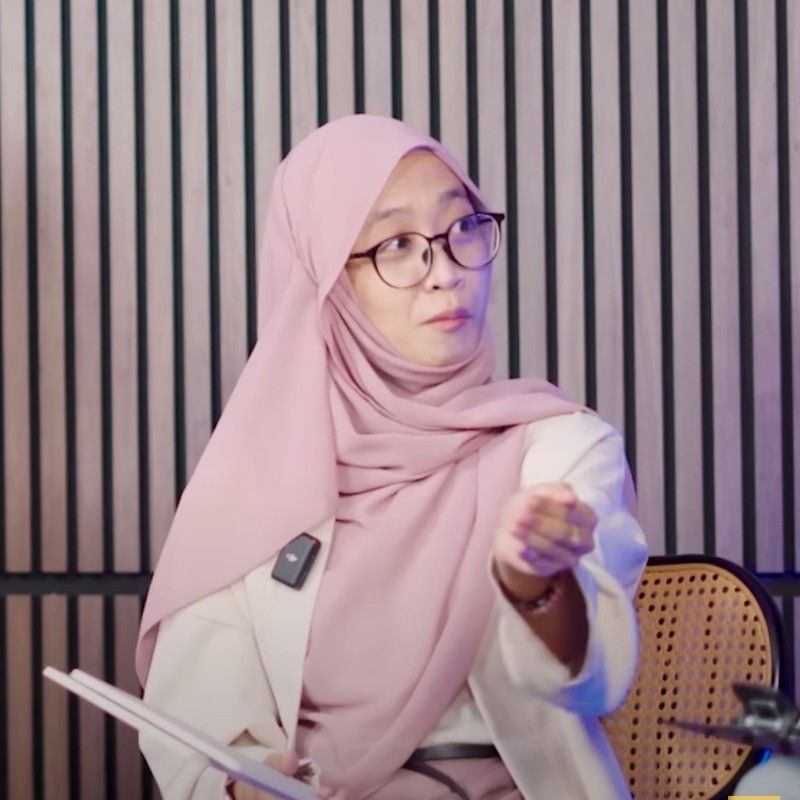
Translating concepts. Field-building. Zero-to-one systems.
Most AI governance research focuses on superpowers. I got curious: what can smaller nations β like the ones in my region β actually do? Spent months in stakeholder interviews, reading policy docs, and asking "but how would this work in practice?" This paper is what I learned.
Compute Governance for Middle Powers
Extended PauseAI's international coordination mechanisms by mapping compute governance pathways for ASEAN nations. Synthesized stakeholder interviews with policy frameworks to propose actionable oversight mechanisms.
Why this matters: Most AI governance research focuses on US/China/EU. This work maps practical pathways for smaller nations to participate in global coordination without requiring superpower-level resources.
π What I loved about this
The detective work β interviewing stakeholders across different countries, finding patterns in how they talk about governance, then translating dense policy frameworks into "here's what you could actually do tomorrow." Every conversation revealed something I hadn't considered.
Stakeholder mapping across 8 ASEAN countries, policy framework analysis, compute infrastructure assessment
Translated technical governance mechanisms into region-appropriate policy recommendations with local political context
Published open-access on arXiv, presented to policy researchers, integrated into advocacy conversations
The most interesting work isn't about executing obvious solutions. It's about seeing problems nobody's named yet, choosing between impossible trade-offs, and making things work despite messy reality. Every project teaches me something new about how humans, systems, and constraints actually interact. Here's my current best guess at how to do this well.
11,000 flood victims needed help now, not after I built something elegant. I shipped in 3 hours, fixed problems in real-time, brought data loss from 40% down to under 5%. The system wasn't pretty, but it worked.
I tried teaching ASEAN students about existential risk. They didn't connect. What they did care about? Bias in loan algorithms, misinformation spreading in their languages. I rebuilt the entire program around their reality β engagement tripled.
I tested 26 different versions of "Morph" β my AI Safety education program. Each version tested a guess about what actually makes concepts stick. Most guesses were wrong. That's fine β I measured, learned, kept going.
(This changes as I learn more, but here's the current version I'm testing)
What's happening that nobody's naming? Who are the actors? What are the actual constraints vs perceived constraints?
What are my actual options? What does each optimize for? What am I trading off by choosing path A vs B vs C?
Build minimum viable infrastructure. Deploy fast. Track leading indicators that predict failure before it cascades.
What assumption failed? How did I detect it? What did I rebuild? Turn failures into reusable playbooks.
Clarity through negation β understanding my positioning by what I avoid
Better software doesn't fix unclear goals or bad processes. I focus on the people and workflow first, then find tools that fit β not the other way around.
Small iterations beat grand plans. I'd rather ship something messy that teaches me what's actually wrong than spend weeks building the "perfect" thing in isolation.
Prototype β measure β iterate β then scale. Premature scaling kills more projects than anything else. Prove it works small before betting big.
Each system shows how I diagnose constraints, design decision trees, and iterate when assumptions fail. The failures are just as important as the wins β they're where the real learning happens. Curious how something turned out? Click into any project to see the full process.
Current Status:
ASEAN had major gaps in AI Safety infrastructure. Very few local researchers. No established academic programs. Minimal community organizing. Students who wanted to contribute had no clear pathways. I was building something that didn't exist yet.
No budget, no team, working solo across 8 countries
Different languages, academic systems, cultural contexts per country
Entire region mostly missing from global AI Safety conversation
Before building anything, I needed to understand what was actually happening on the ground:
Identified 100+ potential contributors across universities, tech companies, policy institutes in 8 countries. Created a database with notes on who's working on what, where they are in their careers, what they care about.
Rather than assuming what would work, I ran pilot conversations. Do students actually care? What language resonates? What's stopping them from engaging with thesis work? Turns out: they cared about near-term safety (bias, misinformation) way more than existential risk framing.
What did I have? Time (20hrs/week), network access (Effective Thesis brand), expertise (AI Safety basics + program design). What didn't I have? Money, a team, institutional authority in the region. Designed around those constraints.
I tested three different entry strategies with real students:
Why I chose direct 1:1 advising:
Students respond faster than institutions. I could prove value with individuals, then use that proof to get institutional buy-in. Also: quality over quantity β 1 completed thesis beats 100 workshop attendees who don't follow through.
My assumption: Students would self-organize after workshops
What actually happened: Workshop energy didn't translate into sustained thesis work. Lost 80% of interested students within 2 weeks.
The fix: Built structured 1:1 advising with regular check-ins, concrete milestones, mentor matching. Retention jumped to 60%+.
How I caught it:
Tracked follow-through rates. When I saw the 80% drop-off, I did post-workshop interviews. Students said: "I'm excited but don't know what to do next." The structure was missing, not the interest.
Context that matters:
Most field-building orgs see 3-5% annual researcher growth. Getting 10% in 6 months in a region with major infrastructure gaps = roughly 4x baseline. This validates the "students first, institutions later" approach.
π What I loved about this
Watching my assumptions break in real-time. I thought students would self-organize after workshops β nope, 80% dropped off. That failure taught me more about human motivation than any success would have. Now I know: structure isn't optional, it's the whole point.
Malaysia's 2021 floods displaced 11,000+ people across 8 states. We had 30+ volunteers, zero centralized tracking, scattered supplies with no inventory visibility, and coordination happening via WhatsApp chaos.
Crisis conditions β people need help NOW, not after perfect system
No budget, no developers, 30 untrained volunteers
Intermittent internet, 8 states, distributed relief sites
Mapped the chaos. Volunteers don't know who's assigned where. Supplies are untracked. No decision-making dashboard. WhatsApp groups hitting message limits.
Key insight: Coordination failure, not resource failure. We have supplies and people β they're just not connected.
Chose no-code tools (Airtable + Make) for speed. Couldn't wait for developers. Needed something volunteers could use immediately without training.
Trade-off: Less powerful than custom code, but 100x faster to deploy. Speed > elegance in crisis.
Built three interconnected systems: (1) Volunteer assignment tracker with location routing, (2) Inventory management with real-time updates, (3) RSVP coordination for 600+ incoming volunteers
Deployment: Live testing with first wave of volunteers while building remaining features.
Assumption: Relief sites have stable internet
Reality discovered after 6 hours: Intermittent connectivity at relief sites. 40% data loss from volunteers trying to submit offline.
Detection Method:
Volunteers reporting "form not saving" via WhatsApp. Cross-referenced submission timestamps with volunteer check-ins β massive gaps.
Emergency Rebuild (6 hours to fix):
Pivoted to offline-first design using Google Forms with automatic sync when connection restored. Reduced data loss from 40% to <5%.
Lesson: Design for the environment you HAVE, not the environment you WANT. Field reality > office assumptions.
Legacy:
System documented as crisis response playbook for future disasters. Now used as template by other volunteer organizations in Malaysia.
This became my standard crisis operations protocol:
Translated AI alignment research into classroom-relevant curriculum for Teach For Malaysia's DutaGuru program. Designed workshop format through 26 iterations of user testing.
Key Framework:
Translation Protocol β Research β Classroom: (1) Extract core concept, (2) Remove jargon, (3) Add local deployment examples, (4) Test comprehension, (5) Iterate based on teacher feedback
Built election coordination dashboards under deadline pressure. Tracked volunteer shifts, candidate schedules, real-time vote counting. Iterated live based on user feedback during 12+ hour operation.
Decision Under Pressure:
Custom code vs no-code tools? Chose Airtable (3 hour build) over waiting for developers (3 day build). Election happens whether system is ready or not β shipped imperfect but functional.
Live iteration example:
Volunteers couldn't find their assigned polling stations. Added location autocomplete + map view mid-operation. Deployment complaints dropped 80% within 2 hours.
Designed "Morph" AI Safety education prototype. Tested 4 program formats (cohort, workshop, curriculum integration, self-paced) through rapid iteration cycles. Each cycle validated one hypothesis about what makes safety concepts stick.
Iteration Framework:
Hypothesis β Prototype β User Test β Measure β Refine. Tracked: comprehension scores, engagement time, follow-through rate. Killed 3 formats that tested poorly. Doubled down on 1 that worked.
Built AI Safety public education via TikTok content. Designed conversion funnel: viral content β website β email list β 1:1 conversations β sustained relationships. Resulted in 15 company partnerships.
Funnel Design:
TikTok (awareness) β Link in bio (interest) β Email capture (intent) β Resource delivery (value) β Conversation invite (conversion). Measured: view-to-click 8%, click-to-email 12%, email-to-conversation 35%.
Effective Thesis Campus Director (ASEAN AI Safety) β testing institutional amplification
CetaLabs Development β testing autonomous capacity-building model. Apart Hackathon winner β Validating program design frameworks
BlueDot AI Governance Fellow β Compute governance policy
300+ teacher workshops β Public AI Safety education at scale
TikTok content (120k views) β Testing public engagement channels
Led digitalization for small organizations, frugally, impactfully. MUDA/Maribantu Tech Lead β Building systems under pressure
Building digital initiatives for a village during COVID-19 with Undi18 under Parliamentary Fellowship
Strategic consulting across government (WBS), startups (VerdasAI), NGOs (BERSIH) β Testing stakeholder synthesis skills across sectors
Every experiment tests the same core hypothesis: Can I build infrastructure in domains where playbooks don't exist? Whether it's flood relief (crisis conditions), ASEAN AI Safety (big pipeline gaps), or teacher workshops (translating research for new audiences) β I'm consistently choosing zero-to-one environments over mature optimization problems.
I'm not climbing a ladder. I'm running experiments to figure out where my skillset creates the most leverage. This is the fun part β I get to test different paths, collect data, and see what I learn. Here's what I'm actively exploring.
Active decision timeline: April β June 2026
Work with established field-building groups like PRISM, Effective Thesis, or BlueDot. I'd scale existing infrastructure with real resources and institutional credibility backing me up.
Grow CetaLabs into a sustainable ASEAN-focused AI Safety platform funded through grants and partnerships. Full creative control, slower scaling.
Do I thrive more with institutional resources + coordination meetings, or autonomy + resource constraints?
Testing via: Effective Thesis role (institutional) vs CetaLabs work (independent)
Should I double down on ASEAN-specific infrastructure, or build transferable systems that work globally?
Testing via: ASEAN mapping vs global compute governance research
I'm good at 0-to-1 building. Do I learn scaling skills myself, or find collaborators who fill that gap?
Testing via: Watching where my pipeline plateaus without scaling support
Decision timeline: Collecting evidence through June 2026